Data Centres
Thermal imaging can identify abnormal transformer connections, liquid levels and cooling performance within electrical systems serving data centres.
Discover MoreTransformers are critical electrical assets whose thermal behaviour reflects loading, electrical connections, insulation systems, oil level and circulation, cooling equipment and surrounding operating conditions. Thermal imaging can reveal abnormal profiles before an issue becomes visually apparent or results in loss of performance.
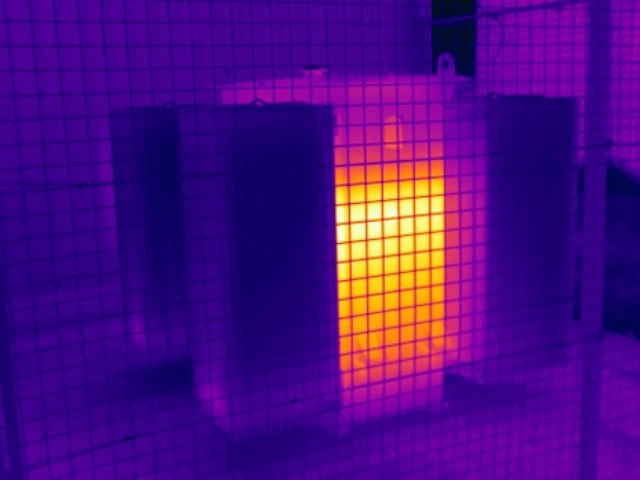
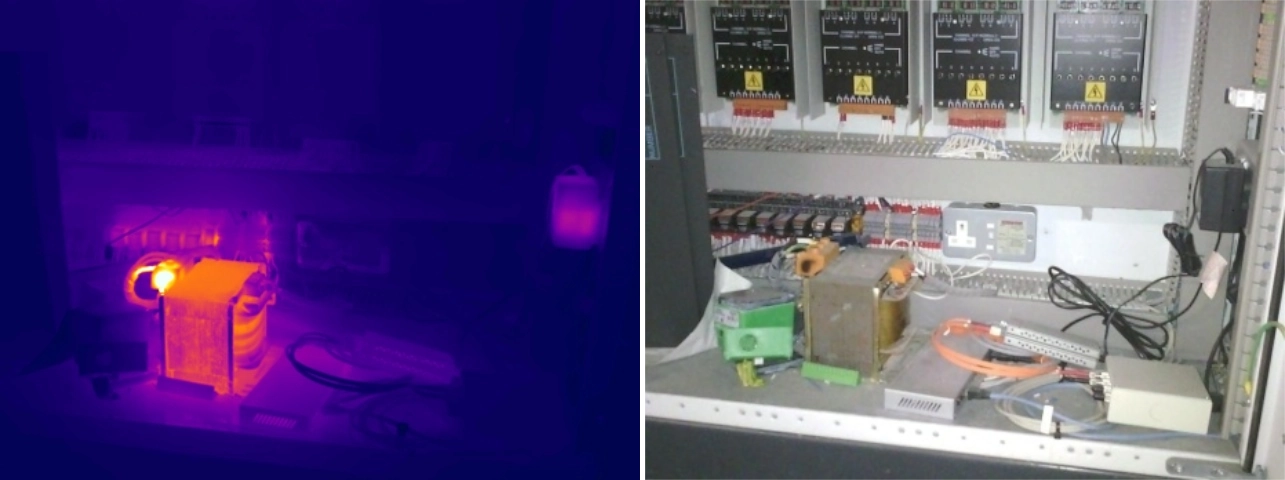
Transformer-related anomalies are varied. They may include poor bushing or terminal connections, abnormal tank temperatures, low liquid levels, restricted radiator flow, incorrectly operating pumps, unequal cooling or problems affecting ancillary equipment such as earth resistors and control-panel transformers.
Our electrical thermal imaging surveys assess accessible transformer systems while equipment remains energised and operating under representative conditions. This page explains how transformer defects may present thermally, why both hot and unexpectedly cool areas matter, and why meaningful interpretation requires an understanding of transformer design and operation.
The potential consequences vary from a local control-circuit defect to reduced cooling capacity, accelerated insulation ageing, loss of transformer life or an outage affecting critical infrastructure. The maintenance response therefore depends on the affected asset, the observed pattern and the operational context.
Effective assessment considers transformer loading, cooling mode, ambient conditions, oil or liquid behaviour, comparable phases and components, historical results and the consequences of failure. A thermal image provides valuable evidence, but it does not replace oil analysis, electrical testing or manufacturer-led investigation where these are required.
For a wider overview, visit our Common Electrical Faults Identified by Thermal Imaging guide. Connection-related transformer anomalies are also covered in our High-Resistance Connections guide.
Transformer defects include electrical, mechanical, cooling and liquid-level conditions that alter expected thermal behaviour. Some create local hotspots, while others appear as broad gradients, level lines or unexpectedly cool components.
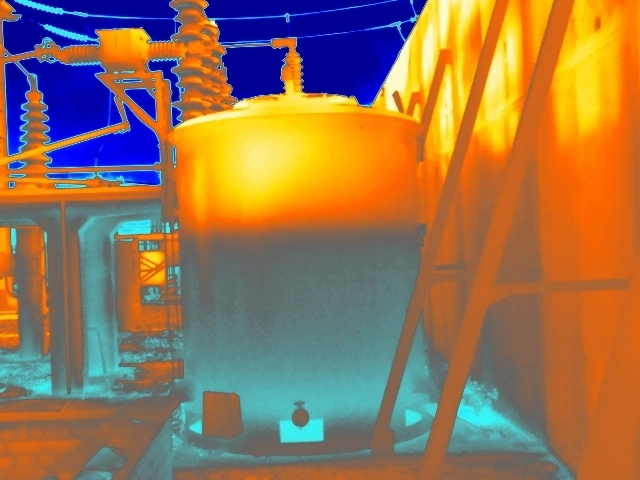
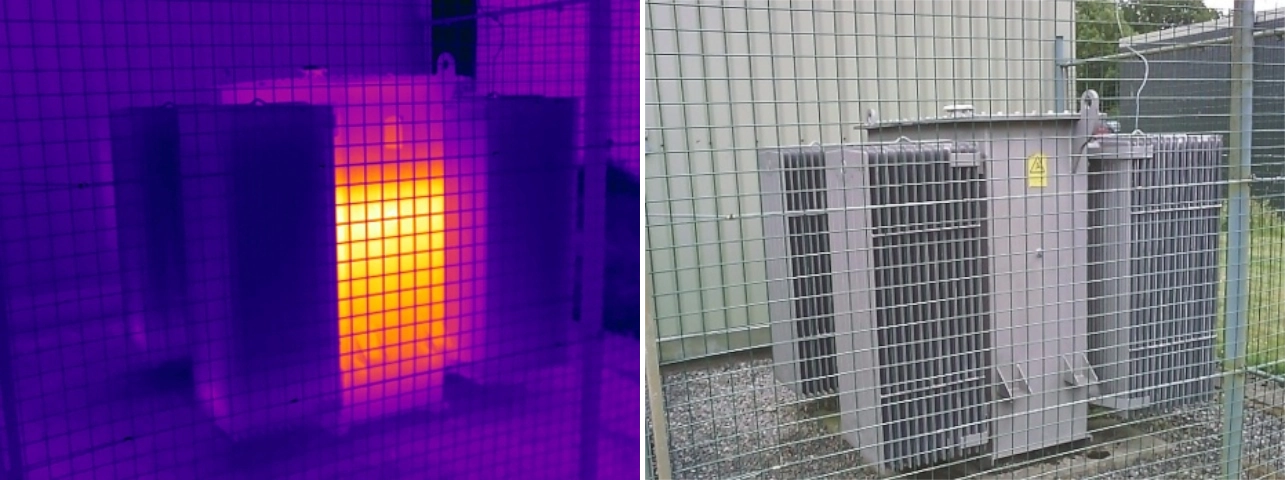
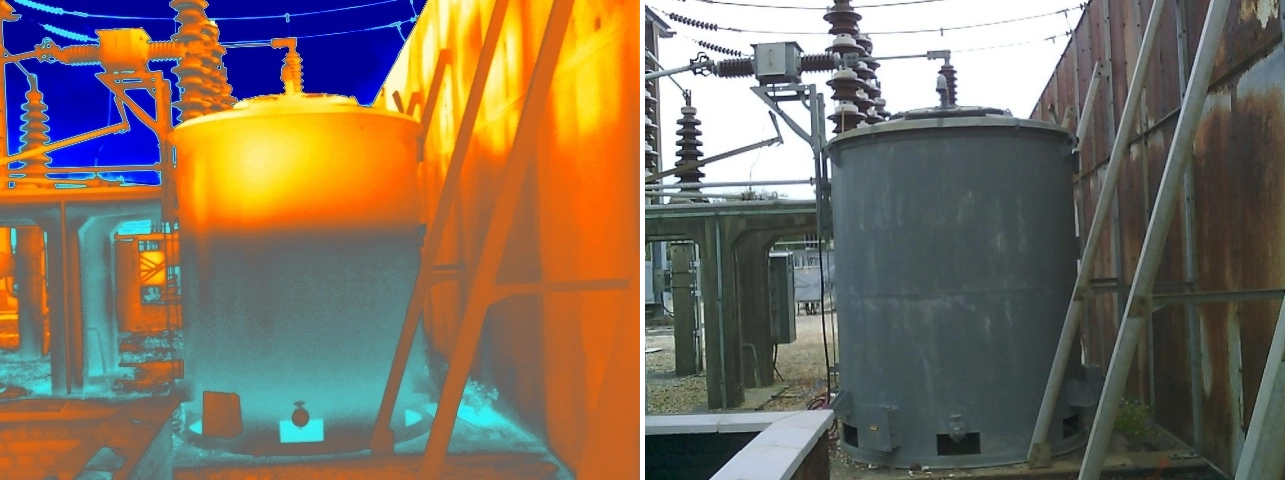
Oil-filled transformers depend on correct oil level and circulation for insulation and heat transfer. A dangerously low level can create an abnormal tank profile and reduce the transformer’s ability to manage internal temperatures safely.
The significance of an observed pattern should be assessed alongside transformer type, loading, cooling arrangement, ambient conditions and available operational data. Further investigation may include oil checks, electrical tests or specialist transformer maintenance.
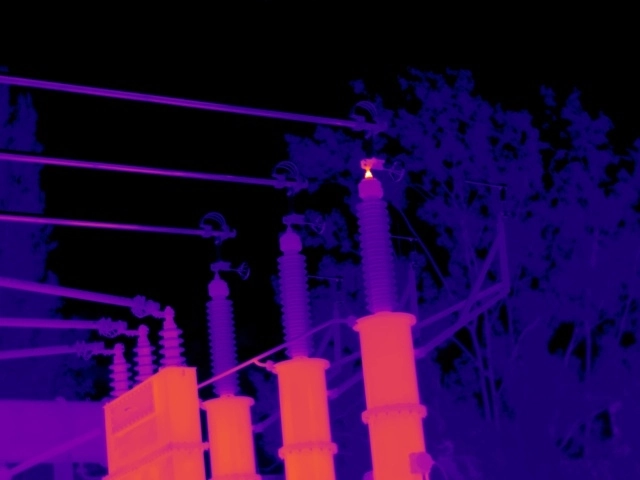
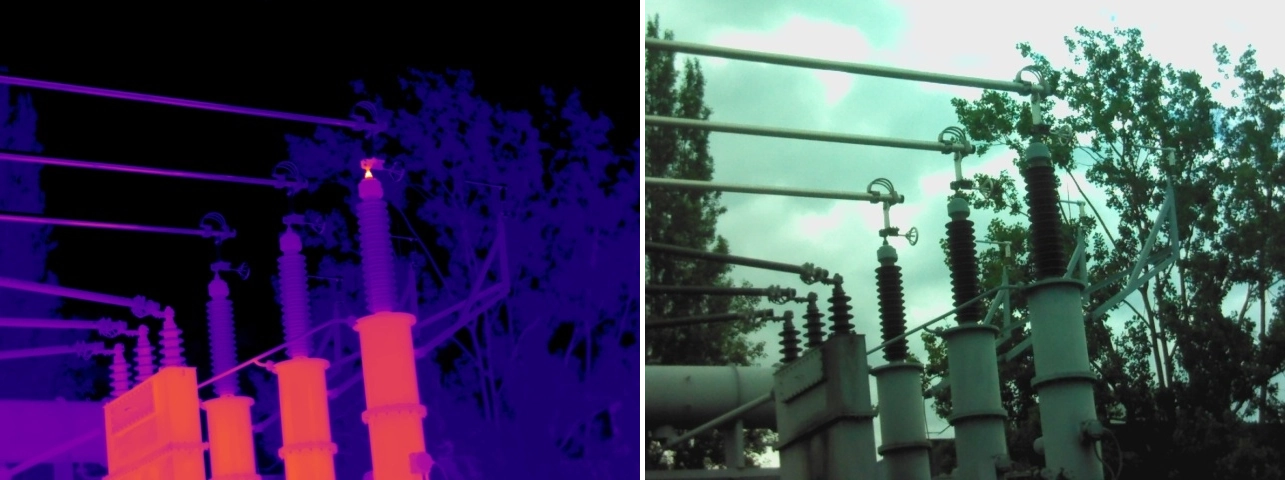
Load current, winding losses and deteriorating connections generate heat. Abnormal localised heating at bushings or terminals may indicate resistance that warrants investigation.
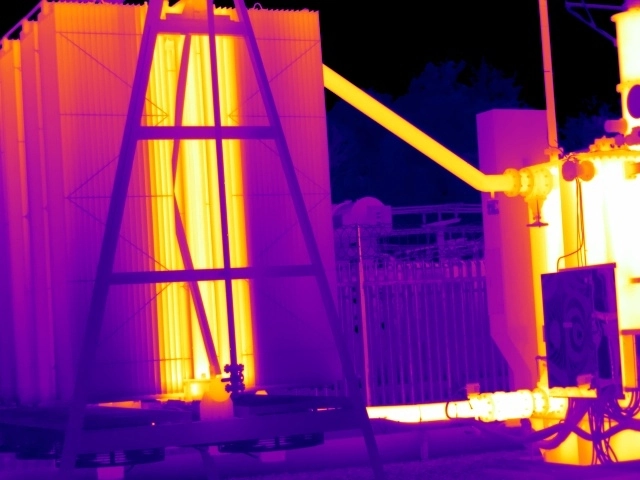
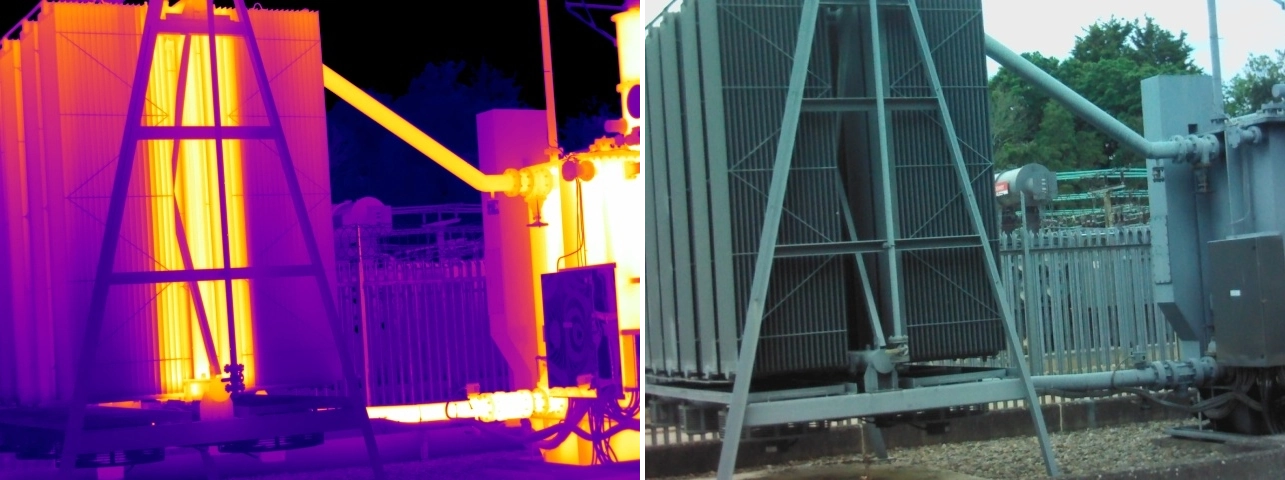
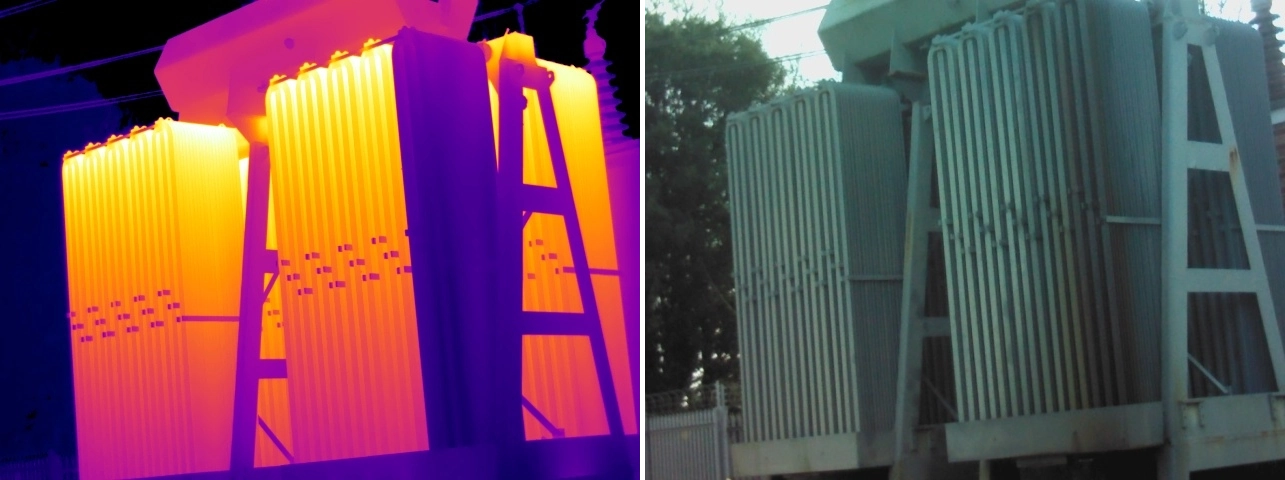
Pumps, radiator banks and natural or forced oil circulation determine how heat is distributed and removed. Reversed flow, restrictions or inactive radiators can create distinctive thermal patterns.
Oil and other liquids transfer heat differently from the gas space above them. Thermography can therefore reveal level boundaries in transformer tanks and ancillary liquid-filled equipment.
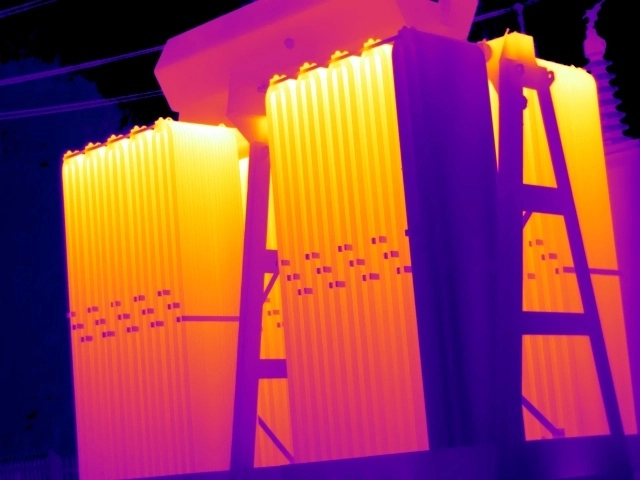
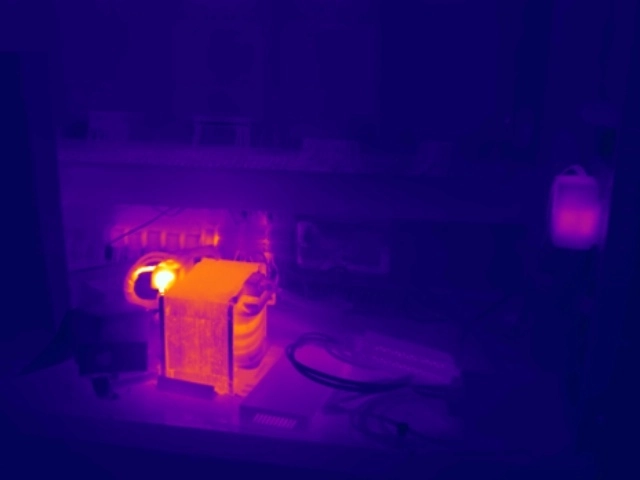
Transformer anomalies can involve ancillary liquid levels, cooling performance, control transformers and high-voltage connections. The four examples below add these varied conditions to the low-oil-level and reversed-pump examples shown above.
Red Current can assess accessible transformer assets under representative operating conditions, provide clear thermal and visual evidence, and deliver an independently reviewed report with prioritised recommendations. We also support electrical testing and HV service companies requiring specialist thermography.
Thermal anomalies may occur at transformer tanks, active parts reflected through tank surfaces, conservators, bushings, cable terminations, radiator banks, pumps, fans, earth resistors and associated control or auxiliary transformers.
A connection defect may produce a local hotspot, while a cooling issue can appear as an unusually cool radiator, reversed gradient or broad temperature imbalance. Liquid levels may appear as distinct thermal boundaries rather than local heating.
The six examples on this page deliberately span distribution and power transformers, cooling systems, ancillary liquid-filled equipment, a control-panel transformer and a Priority 1 high-voltage bushing anomaly. Together they demonstrate the breadth of transformer thermography without repeating imagery.
Thermal imaging identifies transformer conditions that warrant investigation; it does not replace oil sampling, electrical testing, protection checks, safe isolation or specialist transformer maintenance. Corrective action may include restoring liquid level, investigating circulation, servicing pumps or fans, clearing cooling restrictions, repairing connections or planning manufacturer-led work.
Where practicable, a follow-up thermal inspection under comparable load and cooling conditions can help verify improvement. For HV transformers, all investigation should follow site safety rules, switching procedures, environmental controls and manufacturer guidance.
Red Current can provide a specialist electrical thermal imaging survey or follow-up verification inspection under representative operating conditions. Our electrically qualified, ITC/PCN certified thermographers provide clear thermal and visual evidence, independently reviewed reporting and prioritised recommendations, while your appointed transformer specialist or HV service provider remains responsible for testing and remedial work.
Cooling restrictions and inactive radiator sections may appear unexpectedly cool. Thermographers assess the complete thermal profile rather than searching only for maximum temperature.
Pump and fan status, oil circulation, transformer load and ambient conditions can change the expected pattern. The inspection context must be recorded and understood.
Temperature boundaries may reveal oil or liquid level, while gradients across radiator banks can indicate flow direction or restriction. Interpretation depends on transformer construction and operating state.
The value of transformer thermography lies in converting thermal evidence and operating context into a defensible maintenance decision. Red Current’s assessments draw on electrical expertise, ITC/PCN certification, structured review and an in-house knowledge base developed from years of reporting data and millions of thermal images.
Red Current can provide specialist thermal inspection, analysis and reporting while the electrical contractor, transformer specialist or HV service company retains responsibility for oil analysis, electrical testing and remedial work.
Realising the full value of an electrical thermal imaging survey depends on the competence of the thermographer, the quality of the inspection process and the clarity of the final report. Red Current combines electrical knowledge, certified thermography expertise and structured quality assurance to provide findings that can be understood, prioritised and acted upon.
Our electrical thermal imaging surveys are undertaken by electrically qualified, ITC/PCN certified thermographers. These recognised certification schemes provide structured training and assessment in infrared thermography, while our electrical qualifications and field experience support safe, technically informed inspection of live electrical systems. Thermographer competence matters because image capture, measurement, interpretation and reporting must be considered together.
Read more about why ITC/PCN thermography certification and surveyor competence matter.
Our survey and reporting processes are aligned with ISO 18434-1, supporting a consistent approach to inspection, analysis and communication of findings. Reports are prepared to give maintenance teams clear evidence, appropriate context and practical priorities.
See our guidance on electrical thermal imaging standards, reporting and survey requirements.
Thermal images alone do not provide a maintenance strategy. Our reporting process turns observations into documented findings with supporting thermal evidence, priority classifications and recommendations that can be used by facilities teams, insurers and electrical contractors.
Find out whether an electrical thermal imaging report can support insurance requirements.
Transformer assets range from control-panel PSU transformers and 11kV distribution units to 132kV power transformers, bushings and cooling systems. Red Current delivers thermography across commercial, industrial and high-voltage environments, helping ensure each anomaly is considered in the correct asset and operating context.
Explore our common electrical faults guide and high-voltage thermal imaging surveys.
Transformer defects can affect every sector that depends on reliable voltage transformation, critical power distribution and effective asset cooling.
Thermal imaging can identify abnormal transformer connections, liquid levels and cooling performance within electrical systems serving data centres.
Discover More
Thermal imaging can identify abnormal transformer connections, liquid levels and cooling performance within electrical systems serving manufacturing facilities.
Discover More
Thermal imaging can identify abnormal transformer connections, liquid levels and cooling performance within electrical systems serving high voltage substations.
Discover More
Thermal imaging can identify abnormal transformer connections, liquid levels and cooling performance within electrical systems serving hospitals & healthcare facilities.
Discover More
Thermal imaging can identify abnormal transformer connections, liquid levels and cooling performance within electrical systems serving distribution centres.
Discover More
Thermal imaging can identify abnormal transformer connections, liquid levels and cooling performance within electrical systems serving food manufacturing facilities.
Discover More
Thermal imaging can identify abnormal transformer connections, liquid levels and cooling performance within electrical systems serving commercial offices.
Discover More
Thermal imaging can identify abnormal transformer connections, liquid levels and cooling performance within electrical systems serving schools, colleges & universities.
Discover More
Thermal imaging can identify abnormal transformer connections, liquid levels and cooling performance within electrical systems serving shopping centres & retail parks.
Discover MoreThermography can identify abnormal connection heating, uneven phase behaviour, unusual tank profiles, low liquid levels, inactive radiator sections, cooling-flow problems and abnormal ancillary equipment temperatures.
A low oil level may create a visible thermal boundary or abnormal tank profile when operating and environmental conditions allow sufficient temperature contrast. Other checks are required to confirm the actual level.
Thermography can show radiator sections operating unexpectedly cool or with abnormal gradients, which may indicate restricted oil flow or ineffective cooling.
Yes. A blocked radiator, inactive fan or impaired oil circulation may produce unexpectedly cool areas even though the overall condition could contribute to overheating elsewhere.
Abnormal localised heating at a bushing or connection can indicate increased resistance. Load, phase comparison and follow-up investigation are needed to confirm the cause.
No. Thermography assesses surface thermal behaviour under operating conditions. Oil analysis, electrical tests, protection checks and specialist inspection provide different and complementary information.
Priority considers thermal behaviour, transformer load, cooling status, voltage level, asset criticality, likely failure mechanism and the consequences of loss of supply or equipment damage.
Specialist thermographers interpret temperatures, gradients, liquid-level boundaries, cooling performance and connection patterns alongside transformer design and operating conditions, then provide consistent reporting and actionable recommendations.
For broader survey questions, visit our Electrical Thermal Imaging Survey FAQs.
Transformer thermography is not limited to finding hotspots. Abnormal temperature profiles, liquid-level boundaries, cooling gradients and unexpectedly cold radiator sections can all provide valuable evidence. Loading, cooling mode, asset design and appropriate follow-up investigation are essential if findings are to support sound maintenance decisions.
Red Current provides specialist electrical thermography for end users, facilities teams, insurers and electrical testing companies throughout the UK. Contact us to request pricing, obtain a sample report or discuss a subcontract survey requirement.
Please complete the form below to let us know your requirements. We’ll then provide detailed information on costs and our inspection process.
Please complete the form below to let us know your requirements. We’ll then provide detailed information on costs and our inspection process.
Please complete the form below to let us know your requirements. We’ll then provide detailed information on costs and our inspection process.
Please complete the form below to let us know your requirements. We’ll then provide detailed information on costs and our inspection process.
Please complete the form below to let us know your requirements. We’ll then provide detailed information on costs and our inspection process.
Please complete the form below to let us know your requirements. We’ll then provide detailed information on costs and our inspection process.
Please complete the form below to let us know your requirements. We’ll then provide detailed information on costs and our inspection process.
Please complete the form below to let us know your requirements. We’ll then provide detailed information on costs and our inspection process.
Please complete the form below to let us know your requirements. We’ll then provide detailed information on costs and our inspection process.
Please complete the form below to discover our latest offers on the camera you're interested in.
Please fill out this form for us to generate an invoice. Call us on 0118 3320819 or email your enquiry to our team who are on hand to assist.
Please complete the form below to discover our latest offers on the camera you're interested in.
Please complete the form below to let us know your requirements. We’ll provide detailed information on pricing, availability, delivery options, and our thermal camera hire process.
Once submitted, a member of our team will get in touch with tailored guidance to support your needs.
 ELECTRICAL APPLICATIONSData Centre Thermal InspectionsHigh Voltage Substation SurveysManufacturing Facility InspectionsHospital Thermal InspectionsFood Manufacturing InspectionsDistribution Centre InspectionsOffice Building InspectionsSchool & University InspectionsShopping Centre InspectionsOffshore Oil and Gas Surveys
 OTHER APPLICATIONSUnder Floor Heating InspectionsBuilding Heatloss Surveys


