Data Centres
Thermal imaging can identify abnormal switchgear behaviour and developing reliability concerns within electrical systems serving data centres.
Discover MoreElectrical switchgear controls, protects and isolates electrical circuits across low-voltage and high-voltage systems. Thermal imaging can identify abnormal operating patterns associated with deteriorating contacts, joints, internal connections, accessories and other current-carrying components.
Switchgear defects may develop gradually through mechanical wear, repeated operation, thermal cycling, contamination, corrosion, loss of contact pressure, insulation ageing or declining connection integrity. Many internal conditions are not visible while equipment remains enclosed and energised.
Our electrical thermal imaging surveys assess accessible switchgear while systems remain in service and operating under representative load. This page explains how deterioration may present thermally, why comparative patterns matter and why the precise internal cause may require further investigation following safe isolation.
The consequences vary from a developing maintenance issue within an LV switch to loss of supply, arcing or extensive damage within critical main switchboards, RMUs and 11kV switchgear. The significance therefore depends on the affected asset and the services it supports.
Effective assessment considers electrical load, phase comparison, switchgear design, the current path, enclosure effects, operating history and consequences of failure. An external temperature pattern may indicate an internal issue without revealing the exact component responsible.
For a wider overview, visit our Common Electrical Faults Identified by Thermal Imaging guide. Related connection mechanisms are covered in our High-Resistance Connections guide.
Switchgear deterioration describes declining condition within switches, circuit interrupters, contacts, joints, mechanisms, insulation systems and associated assemblies. The equipment may continue operating while thermal behaviour changes under load.
Thermal imaging can identify heat transferring to accessible surfaces from internal components. The visible pattern may indicate the location of abnormal behaviour, but the enclosure can spread or obscure heat and prevent a precise diagnosis from the thermogram alone.
The finding should be considered alongside load, equipment design, comparable phases or units, operating history and manufacturer guidance. Safe inspection and appropriate testing may then be needed to confirm the internal cause.
Deteriorating contacts, joints or connection interfaces can increase resistance and generate localised heat while current flows through the switchgear.
Repeated switching, loss of contact pressure, contamination, corrosion and insulation ageing can alter electrical and thermal performance over time.
The measured surface temperature may be displaced from the internal source. Switchgear construction, ventilation and thermal mass all influence the pattern visible to the thermographer.
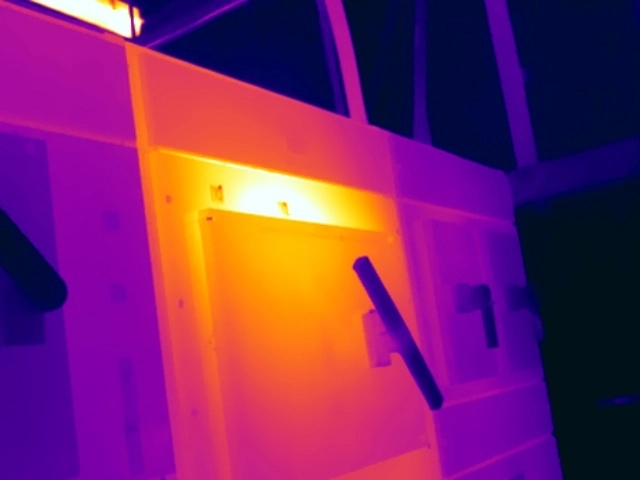
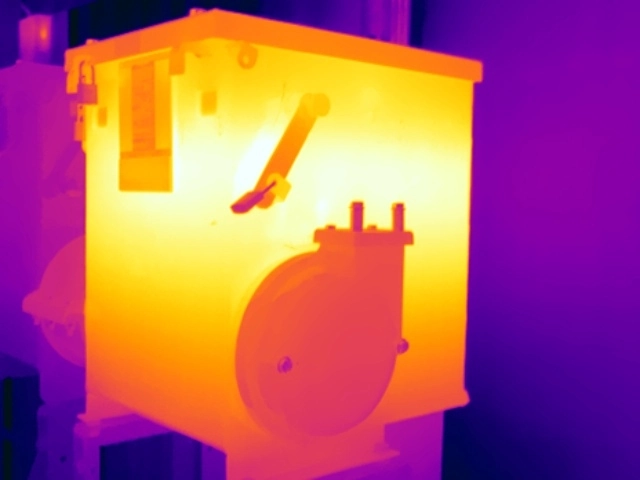
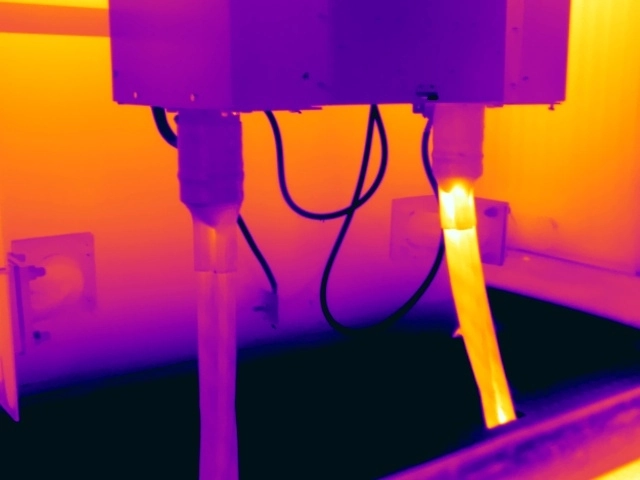
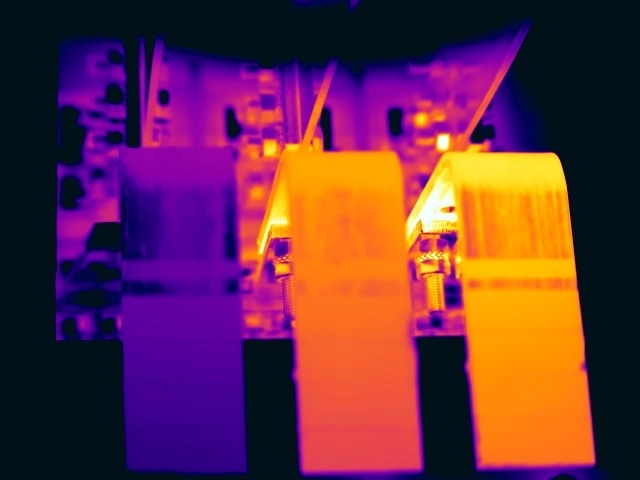
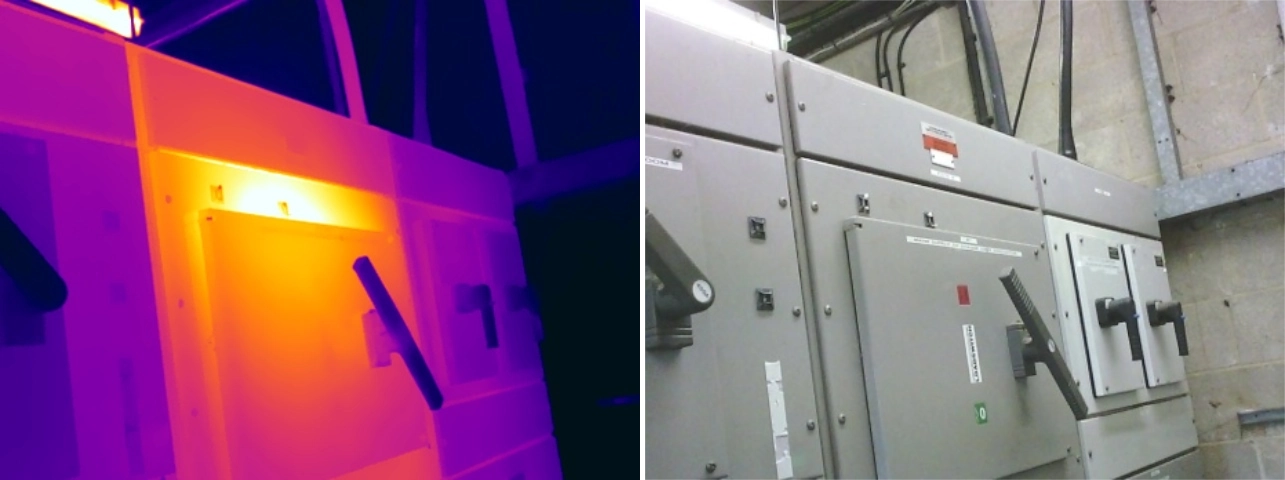
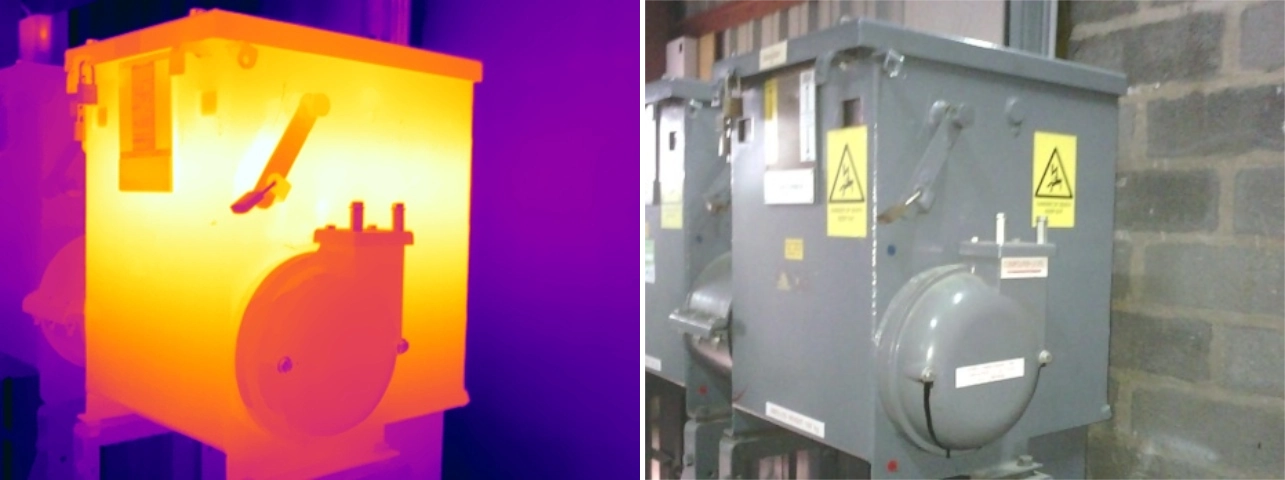
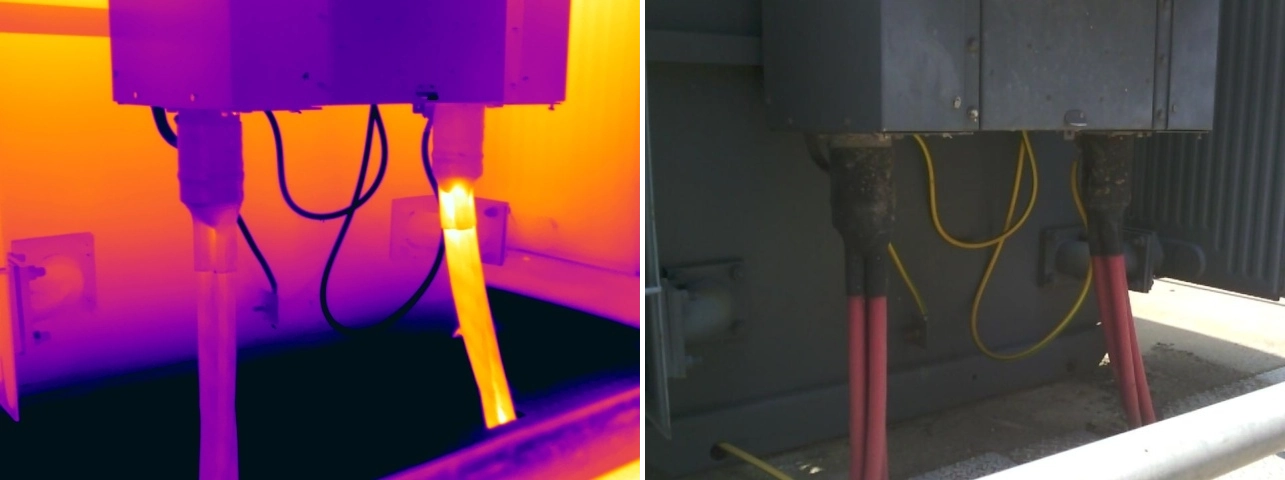
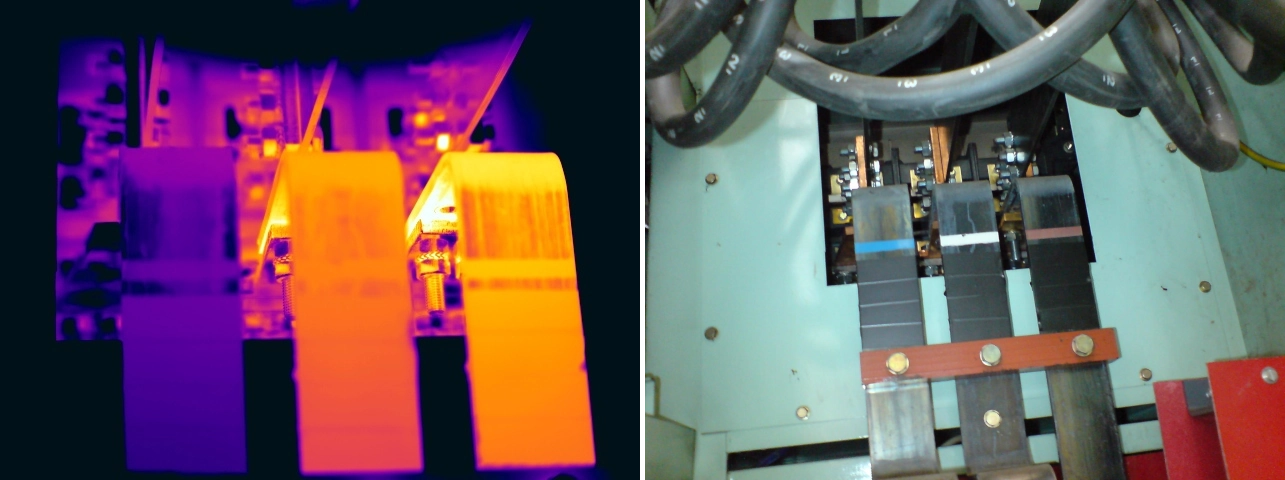
Switchgear deterioration can be inferred from unequal cable or connection temperatures as well as direct surface heating. The examples below add an RMU cable comparison and LV switch-to-busbar assembly to the LV main-switch and 11kV examples shown above.
Red Current can assess accessible LV and HV switchgear under representative load, provide clear thermal and visual evidence, and deliver an independently reviewed report with prioritised recommendations. We also support electrical testing companies requiring specialist thermography.
Thermal anomalies may occur within LV main switches, distribution switchboards, MCCs, circuit-breaker compartments, busbar chambers, Ring Main Units, 11kV switchgear, isolators and associated cable termination compartments.
The anomaly may appear directly over a switch body, at a switch-to-busbar interface or indirectly as unequal temperatures on comparable incoming or outgoing cables. Understanding the current path is essential when tracing a likely internal source.
The four examples on this page span LV and 11kV switchgear together with an RMU and switch-to-busbar assembly. Together they demonstrate that deterioration can present as direct heating or as a comparative difference elsewhere in the connected circuit.
Thermal imaging identifies switchgear that warrants investigation; it does not replace safe isolation, internal inspection, maintenance or electrical testing by appropriately competent personnel. Corrective action may include inspection of contacts and joints, cleaning, adjustment, replacement of degraded components or planned switchgear refurbishment.
Where practicable, a follow-up thermal inspection under comparable operating load can help verify that corrective work has resolved the abnormal pattern. For HV equipment, investigation and maintenance should follow the site’s safety rules, switching procedures and manufacturer guidance.
Red Current can provide a specialist electrical thermal imaging survey or follow-up verification inspection under representative operating load. Our electrically qualified, ITC/PCN certified thermographers provide clear thermal and visual evidence, independently reviewed reporting and prioritised recommendations, while your appointed electrical contractor or HV service provider remains responsible for isolation, internal investigation and remedial work.
Heat can conduct through switchgear housings and internal structures. The visible hotspot may be displaced from the deteriorating contact, joint or component.
Ring cables, adjacent phases and similar switchgear operating under comparable load can reveal differences that would be difficult to interpret from one temperature reading alone.
Closed compartments and insulation systems can mask internal conditions. Thermography directs further investigation but should not be presented as a complete internal diagnosis where the source is not visible.
The value of an electrical thermal imaging survey lies in converting thermal evidence and equipment context into a defensible maintenance decision. Red Current’s assessments draw on electrical expertise, ITC/PCN certification, structured review and an in-house knowledge base developed from years of reporting data and millions of thermal images.
Red Current can provide specialist LV and accessible HV thermographic inspection, interpretation and reporting while the electrical or HV testing contractor retains the client relationship and responsibility for internal testing or remedial work.
Realising the full value of an electrical thermal imaging survey depends on the competence of the thermographer, the quality of the inspection process and the clarity of the final report. Red Current combines electrical knowledge, certified thermography expertise and structured quality assurance to provide findings that can be understood, prioritised and acted upon.
Our electrical thermal imaging surveys are undertaken by electrically qualified, ITC/PCN certified thermographers. These recognised certification schemes provide structured training and assessment in infrared thermography, while our electrical qualifications and field experience support safe, technically informed inspection of live electrical systems. Thermographer competence matters because image capture, measurement, interpretation and reporting must be considered together.
Read more about why ITC/PCN thermography certification and surveyor competence matter.
Our survey and reporting processes are aligned with ISO 18434-1, supporting a consistent approach to inspection, analysis and communication of findings. Reports are prepared to give maintenance teams clear evidence, appropriate context and practical priorities.
See our guidance on electrical thermal imaging standards, reporting and survey requirements.
Thermal images alone do not provide a maintenance strategy. Our reporting process turns observations into documented findings with supporting thermal evidence, priority classifications and recommendations that can be used by facilities teams, insurers and electrical contractors.
Find out whether an electrical thermal imaging report can support insurance requirements.
Switchgear ranges from LV main switches and MCCs to RMUs and 11kV assemblies. Red Current delivers electrical thermography across commercial, industrial and high-voltage environments, helping ensure each anomaly is assessed in the correct asset, load and operational context.
Explore our common electrical faults guide and high-voltage thermal imaging surveys.
Deteriorating switchgear can affect every sector where electrical distribution, isolation and protection are critical to continuity, safety or production.
Thermal imaging can identify abnormal switchgear behaviour and developing reliability concerns within electrical systems serving data centres.
Discover More
Thermal imaging can identify abnormal switchgear behaviour and developing reliability concerns within electrical systems serving manufacturing facilities.
Discover More
Thermal imaging can identify abnormal switchgear behaviour and developing reliability concerns within electrical systems serving high voltage substations.
Discover More
Thermal imaging can identify abnormal switchgear behaviour and developing reliability concerns within electrical systems serving hospitals & healthcare facilities.
Discover More
Thermal imaging can identify abnormal switchgear behaviour and developing reliability concerns within electrical systems serving distribution centres.
Discover More
Thermal imaging can identify abnormal switchgear behaviour and developing reliability concerns within electrical systems serving food manufacturing facilities.
Discover More
Thermal imaging can identify abnormal switchgear behaviour and developing reliability concerns within electrical systems serving commercial offices.
Discover More
Thermal imaging can identify abnormal switchgear behaviour and developing reliability concerns within electrical systems serving schools, colleges & universities.
Discover More
Thermal imaging can identify abnormal switchgear behaviour and developing reliability concerns within electrical systems serving shopping centres & retail parks.
Discover MoreCommon causes include contact wear, repeated switching, loss of contact pressure, thermal cycling, contamination, corrosion, insulation ageing, connection deterioration and adverse environmental conditions.
Thermal imaging can identify abnormal surface or comparative temperature patterns that may indicate an internal issue. The precise cause may require safe internal inspection and further testing.
A difference between comparable ring cables under similar load can indicate abnormal behaviour within an RMU or associated connection. Load and circuit conditions must be checked before reaching a conclusion.
Not always. Heat can transfer through internal structures and enclosures, so the visible surface pattern may be displaced from the source.
Yes. Continued deterioration can contribute to loss of switching function, connection failure, arcing, equipment damage or unplanned loss of supply.
No. Thermography is a condition-monitoring tool that helps direct maintenance. It does not replace safe isolation, internal inspection, testing or manufacturer-specified servicing.
Priority considers the thermal pattern, loading, equipment type, voltage level, asset criticality, possible failure mechanisms and consequences of an outage or electrical incident.
Specialist thermographers understand heat transfer, comparative analysis, switchgear construction and operational context, then communicate findings through consistent reporting and actionable recommendations.
For broader survey questions, visit our Electrical Thermal Imaging Survey FAQs.
Thermal imaging can reveal abnormal switchgear behaviour before visible failure, but external temperature alone does not identify every internal cause. Representative loading, comparative analysis, equipment knowledge and appropriate investigation are essential if findings are to support sound maintenance decisions.
Red Current provides specialist electrical thermography for end users, facilities teams, insurers and electrical testing companies throughout the UK. Contact us to request pricing, obtain a sample report or discuss a subcontract survey requirement.
Please complete the form below to let us know your requirements. We’ll then provide detailed information on costs and our inspection process.
Please complete the form below to let us know your requirements. We’ll then provide detailed information on costs and our inspection process.
Please complete the form below to let us know your requirements. We’ll then provide detailed information on costs and our inspection process.
Please complete the form below to let us know your requirements. We’ll then provide detailed information on costs and our inspection process.
Please complete the form below to let us know your requirements. We’ll then provide detailed information on costs and our inspection process.
Please complete the form below to let us know your requirements. We’ll then provide detailed information on costs and our inspection process.
Please complete the form below to let us know your requirements. We’ll then provide detailed information on costs and our inspection process.
Please complete the form below to let us know your requirements. We’ll then provide detailed information on costs and our inspection process.
Please complete the form below to let us know your requirements. We’ll then provide detailed information on costs and our inspection process.
Please complete the form below to discover our latest offers on the camera you're interested in.
Please fill out this form for us to generate an invoice. Call us on 0118 3320819 or email your enquiry to our team who are on hand to assist.
Please complete the form below to discover our latest offers on the camera you're interested in.
Please complete the form below to let us know your requirements. We’ll provide detailed information on pricing, availability, delivery options, and our thermal camera hire process.
Once submitted, a member of our team will get in touch with tailored guidance to support your needs.
 ELECTRICAL APPLICATIONSData Centre Thermal InspectionsHigh Voltage Substation SurveysManufacturing Facility InspectionsHospital Thermal InspectionsFood Manufacturing InspectionsDistribution Centre InspectionsOffice Building InspectionsSchool & University InspectionsShopping Centre InspectionsOffshore Oil and Gas Surveys
 OTHER APPLICATIONSUnder Floor Heating InspectionsBuilding Heatloss Surveys


